
This Startup Wants to Build Self-Driving Car Software—Super Fast Leave a comment
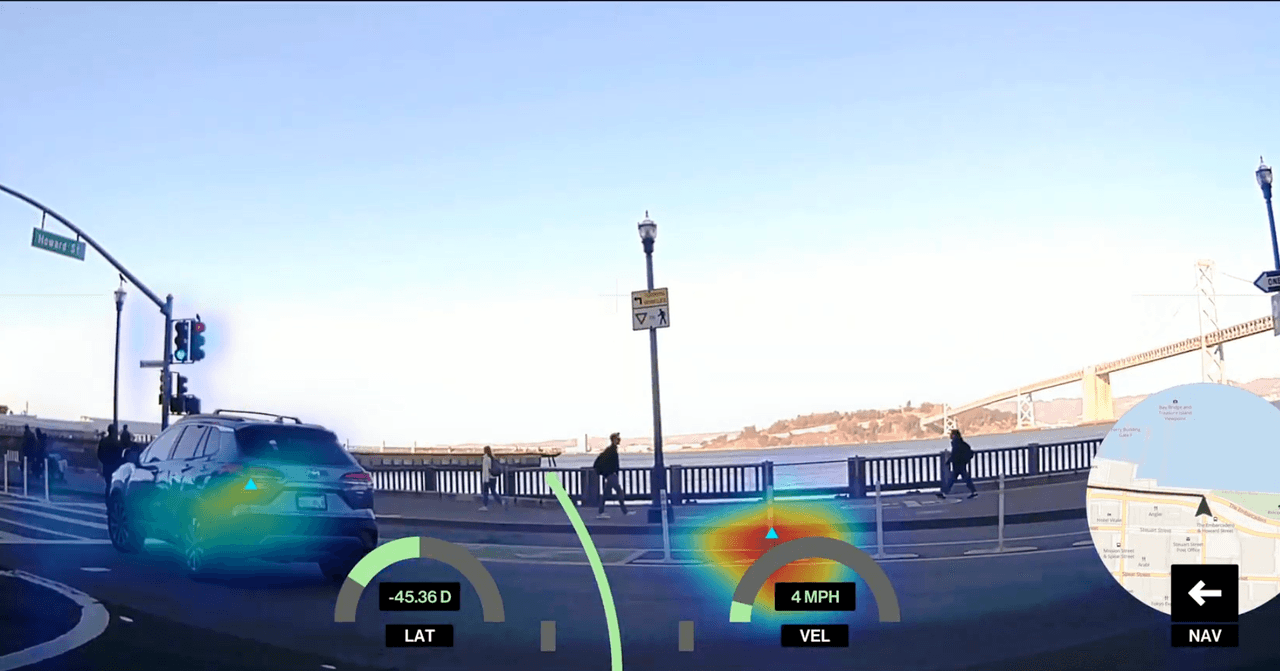
For the final yr and a half, two hacked white Tesla Mannequin 3 sedans every loaded with 5 further cameras and one palm-sized supercomputer have quietly cruised round San Francisco. In a metropolis and period swarming with questions concerning the capabilities and limits of synthetic intelligence, the startup behind the modified Teslas is attempting to reply what quantities to a easy query: How shortly can an organization construct autonomous automobile software program at present?
The startup, which is making its actions public for the primary time at present, known as HyprLabs. Its 17-person group (simply eight of them full-time) is split between Paris and San Francisco, and the corporate is helmed by an autonomous automobile firm veteran, Zoox cofounder Tim Kentley-Klay, who suddenly exited the now Amazon-owned agency in 2018. Hypr has taken in comparatively little funding, $5.5 million since 2022, however its ambitions are wide-ranging. Ultimately, it plans to construct and function its personal robots. “Consider the love baby of R2-D2 and Sonic the Hedgehog,” Kentley-Klay says. “It’ll outline a brand new class that does not presently exist.”
For now, although, the startup is saying its software program product known as Hyprdrive, which it payments as a leap ahead in how engineers practice automobiles to pilot themselves. These types of leaps are everywhere in the robotics house, because of advances in machine studying that promise to convey down the price of coaching autonomous automobile software program, and the quantity of human labor concerned. This coaching evolution has introduced new motion to an area that for years suffered via a “trough of disillusionment,” as tech builders failed to fulfill their very own deadlines to function robots in public areas. Now, robotaxis pick up paying passengers in more and more cities, and automakers make newly bold guarantees about bringing self-driving to customers’ personal cars.
However utilizing a small, agile, and low cost group to get from “driving fairly effectively” to “driving way more safely than a human” is its personal lengthy hurdle. “I am unable to say to you, hand on coronary heart, that this may work,” Kentley-Klay says. “However what we’ve constructed is a extremely stable sign. It simply must be scaled up.”
Outdated Tech, New Methods
HyprLabs’ software program coaching approach is a departure from different robotics’ startups approaches to instructing their programs to drive themselves.
First, some background: For years, the massive battle in autonomous automobiles gave the impression to be between those that used simply cameras to coach their software program—Tesla!—and people who trusted different sensors, too—Waymo, Cruise!—together with once-expensive lidar and radar. However beneath the floor, bigger philosophical variations churned.
Digital camera-only adherents like Tesla wished to economize whereas scheming to launch a huge fleet of robots; for a decade, CEO Elon Musk’s plan has been to abruptly swap all of his clients’ vehicles to self-driving ones with the push of a software program replace. The upside was that these firms had tons and plenty of knowledge, as their not-yet self-driving vehicles collected photos wherever they drove. This data bought fed into what’s known as an “end-to-end” machine studying mannequin via reinforcement. The system takes in photos—a motorcycle—and spits out driving instructions—transfer the steering wheel to the left and go straightforward on the acceleration to keep away from hitting it. “It’s like coaching a canine,” says Philip Koopman, an autonomous automobile software program and security researcher at Carnegie Mellon College. “On the finish, you say, ‘Dangerous canine,” or ‘Good canine.’”
