
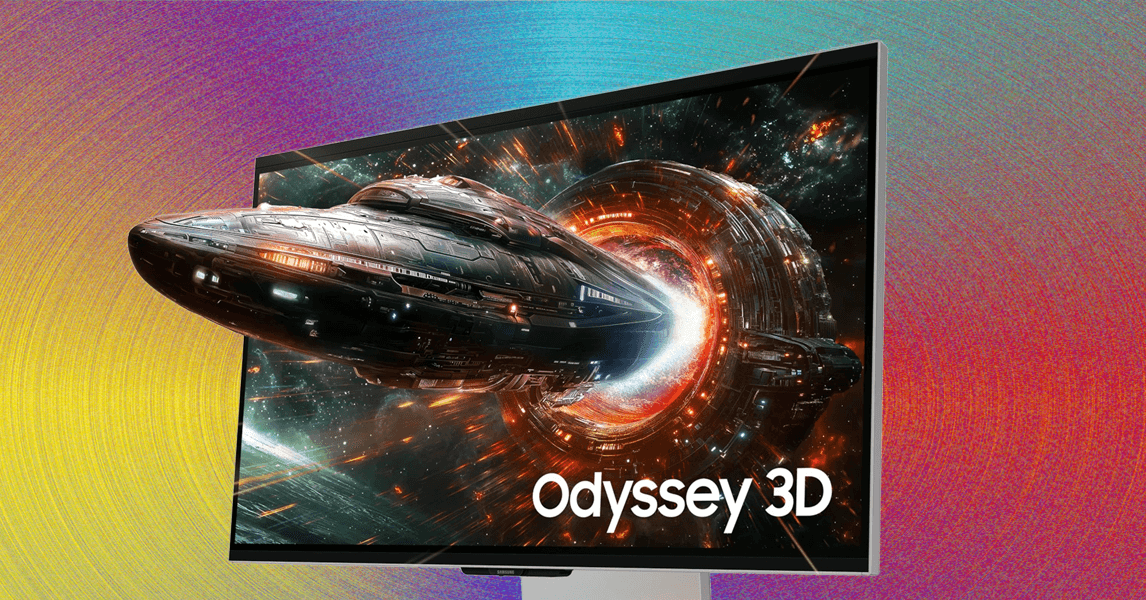
3D Is Back. This Time, You Can Ditch the Glasses Leave a comment
Samsung says it carried out an inner survey amongst what it calls its “hardcore gaming” demographic to seek out out what they needed in a next-generation gaming show. This demographic is marked by a willingness to pay 1000’s for the newest PC gaming gear. Sixty-two p.c stated they anticipated the subsequent technology to incorporate superior immersion—the proper place to check the waters with 3D tech.
“As we’re trying on the demographic, or simply the general shopper base for screens, particularly whenever you’re speaking about premium screens over $1,000, the overwhelming majority is spending it on gaming,” You says. That is essential as a result of these first 3D gaming screens do not come low cost. Regardless of the surprisingly restricted sport assist at launch, the Samsung Odyssey 3D costs a cool $2,000.
“We’re in that early adopter stage, proper? The sticker value is somewhat little bit of a shock to most customers,” he says. “However we really feel like as soon as we get individuals into the 3D ecosystem, we’ll get extra sport studios and builders introduced into it as a result of they see the full accessible market growing.”
When it comes all the way down to it, players are keen to spend extra on an immersive expertise, and that’s going to purchase time for the remainder of the 3D ecosystem to catch up.
3D on Each Display
As You notes, even the Odyssey 3D is “a lot greater than only a 3D gaming monitor.” Whether or not it’s YouTube, Zoom, and even simply full-screen images, the show can convert 2D into 3D utilizing machine-learning algorithms, including a man-made layer of depth that wasn’t beforehand there. Whereas the impact isn’t as convincing as in video games, and DRM limitations limit the content material, it’s a formidable tech demo nonetheless. Greater than that, AI is enabling 3D to beat the necessity for tailored 3D content material, one other one of many foremost issues with 3D tech prior to now. It’s planting the seeds for broader makes use of {that a} extra mainstream viewers can profit from.
Fattal says gaming is his second-favorite use case for 3D. “3D has that energy to convey the human connection quite a bit higher than on a flat display,” he says, explaining that taking 3D images and movies of his youngsters was what made him really consider within the energy of 3D. His dream is a world wherein all movies could be taken and skilled in 3D. “Our aim is to finish up fully normal on all gadgets, however particularly on cell telephones, so that individuals can chat and take footage and movies, and share on social media—and all of that must be in 3D.”
It’s an formidable aspiration, and one echoed by Silicon Valley titans. Apple and Google have been touting spatial images and movies with their respective mixed-reality ecosystems, the place you can expertise recollections with depth. Google additionally lately confirmed off Google Beam—a strategy to convert individuals in video calls to look extra 3D and lifelike for a extra private contact.
The Apple Imaginative and prescient Professional might by no means exist with out players keen to check out the early variations of VR, even with the extreme lack of sport libraries and uncomfortable headsets. There have at all times been different use instances for VR, however gaming has at all times been the primary draw. It’s too early to say whether or not this new period of 3D can have extra success going past gaming than VR has.
Don’t anticipate 3D TVs to make a comeback anytime quickly—the present implementation makes it in order that the 3D tech solely works for one particular person. However for now, corporations like Samsung have a lot brighter hopes for the proliferation of 3D, promising to “triple down” on its 3D monitor lineup within the subsequent 12 months or two. That’s a critical vote of confidence.
