
Tech in the Classroom: A History of Hype and Hysteria Leave a comment
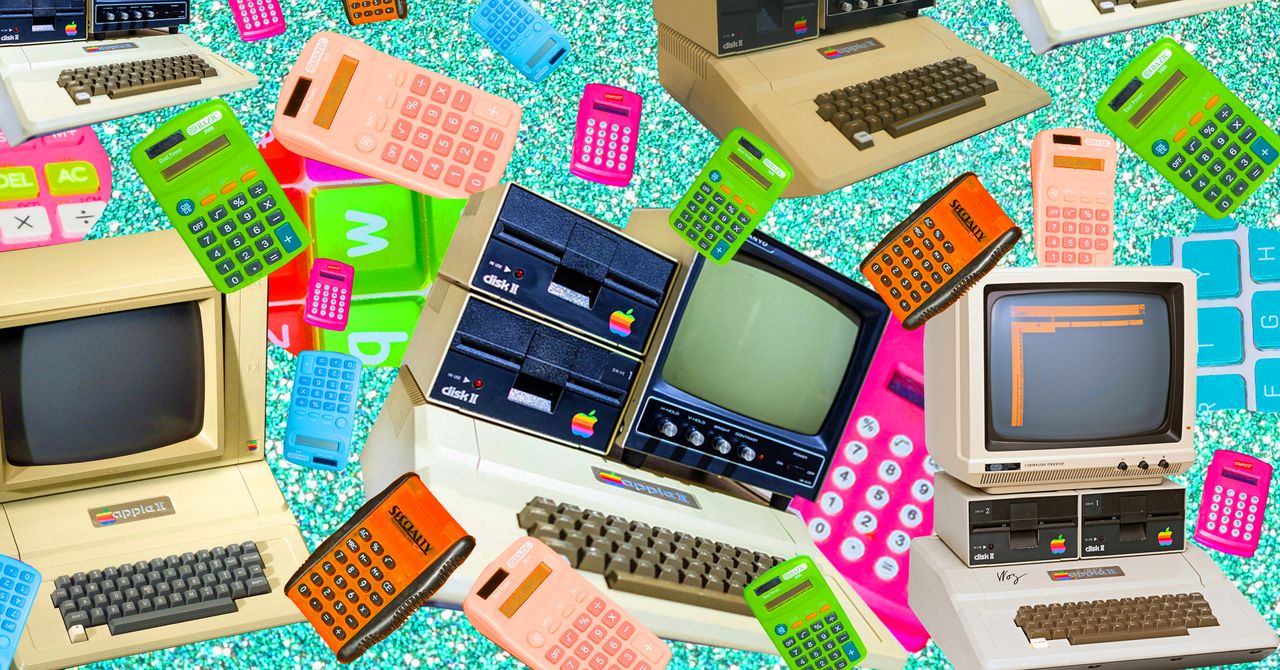
Adoption by faculties: Apple performed an important function in getting computer systems into lecture rooms, partly by promoting legislation to supply tax breaks to laptop producers that donated computer systems to varsities, museums, and libraries. Within the early Nineteen Eighties, Apple donated close to 10,000 of its Apple IIe computers to California faculties as a part of the corporate’s Children Can’t Wait program.
In 1984, there was a 1:92 computer-to-student ratio in US public faculties. Twenty-four years later, in 2008, the ratio was 1:4. By 2021, 90 % of college district leaders surveyed by Education Week mentioned they had been offering one “school-issued digital studying machine” per center and highschool pupil. Eighty-four % mentioned they had been doing the identical for his or her elementary faculty college students.
Public Panic:
“A. Daniel Peck, an schooling professor at San Francisco State College, is typical of an more and more vocal physique of skeptics. ‘We’re in a pc faith explosion to the detriment of basic-skills schooling,’ Peck says. ‘We should be trying on the extent to which the pc splurge is diluting schooling; it most definitely just isn’t serving to.’ Peck has organized an advert hoc committee of educators and enterprise individuals, referred to as the Committee on Primary Expertise Schooling, to fight the march of computer systems into the colleges. A place paper by the group requires assist to ‘cease the bandwagon’ earlier than ‘the tutorial system goes overboard on its reliance on microcomputers.’”
“Computer systems: Too A lot Too Quickly,” The Washington Post, 1983
The Interactive Whiteboard
Launched to the general public: 1991
Price: In 2009, they value from $700 to $4,500 (from about $1,069 to $6,874 when adjusted for inflation).
Adoption by faculties: Near one-third of K-12 classrooms within the US had an interactive white board (or “wall display screen”) by 2009. From 2004 to 2009, international sales rose from 170,000 to 700,000—principally to varsities.
Public Panic:
“There are actual issues concerning the excessive value of whiteboards. Many educators would favor to see funding go into different applied sciences, like laptops or pill gadgets. Educators are additionally involved that whiteboards emphasize teacher-centered classes over student-centered classes.”
“Interactive Whiteboards Permit Extra Sharing,” The New York Times, 2012
The Web
Launched to the general public: The World Vast Internet was launched in 1991, however mainstream use of the web kicked off when Mosaic, the primary graphical net browser, was launched in 1993.
Price: In 1996, limitless entry to the web by means of AOL cost $19.99 a month (about $42 when adjusted for inflation).
Adoption by faculties: In 1994, 3 % of US public faculties had web entry. By 2001, that had risen to 87 percent. The Federal Communications Fee’s E-Fee program, established in 1996 as a part of the Telecommunications Act, helped subsidize the web for faculties and libraries. By 2001, the E-Fee program dedicated $5.8 billion to applicants throughout the nation.
Public Panic:
“Sure, the Web is a incredible, vibrant, and evolving medium that’s altering the world. Nevertheless, this isn’t a know-how destined to enhance our faculties. [President Bill] Clinton’s Web infatuation gives a pathetic however telling image of simply how a lot the historical past and function of know-how in schooling is misunderstood. This infatuation is about politics and pandering, not promise and potential.”
