
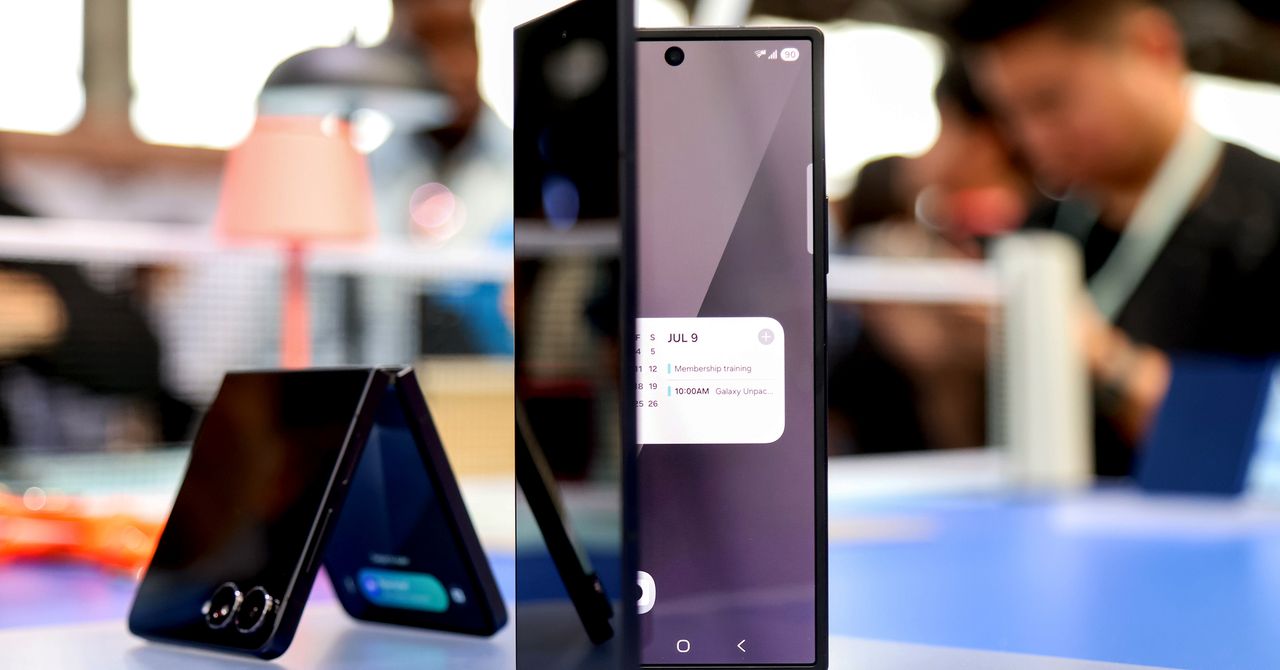
Samsung’s New Phones Show How Far Ahead China Is on Innovation Leave a comment
And regardless of all these hinges and all that complexity, the Huawei Mate XT is just fractionally thicker than Samsung’s last-generation Galaxy Z Fold6, launched just some months earlier.
Some believed Samsung would tease a trifold telephone at this 12 months’s Samsung Unpacked launch, but it surely did not materialize. As an alternative it introduced after the occasion that it was “working onerous” on one, and that it could be coming on the finish of 2025. Reducing-edge tech is starting to look slightly blunt in Samsung’s palms. So what’s occurring?
Why is each main prime Chinese language producer, from Xiaomi to Huawei, set to launch a foldable this 12 months whereas Samsung appears afraid to make greater than piecemeal upgrades, and others, like Apple, stay extremely quiet. And why will we within the West get to see so few of those telephones, even from the manufacturers not—like Huawei—sanctioned by the US authorities?
Apparently a part of it’s right down to Chinese language viewers being extra concerned with searching for one thing new, in comparison with the common UK or US purchaser.
“Chinese language shoppers have matured considerably, with many now on their fifth or sixth smartphone. This expertise has led them to actively search distinctive and superior gadgets,” says Counterpoint Analysis Vice President Neil Shah.
“China is the biggest foldable market globally due the rising demand and urge for food for differentiated smartphones. The foldable penetration inside China smartphone gross sales can be constantly increased than every other markets. Two out of three foldable telephones bought globally are in China.”
“Different prosperous markets such because the USA and Western Europe are nonetheless across the world common of 1 % penetration of foldables, of the full smartphone gross sales.”
Similar Outdated, Similar Outdated
Regardless of an simple curiosity in them, it appears most of us are nonetheless not prepared to really purchase foldables, a lot as we might complain about smartphones by no means altering. The outcome: Chinese language telephone manufacturers have developed quickly whereas others centered on Western gross sales have stagnated. It’s some extent the UK’s Nothing has made a fulcrum in its personal advertising and marketing.
Carl Pei, Nothing CEO and cofounder of fake startup OnePlus, known as present client tech “boring” on the launch of the Nothing Cellphone (3), suggesting the previous magic and pleasure of latest tech has vanished. Whereas Nothing’s personal improvements are arguably largely superficial, he does have some extent.
However why are the Chinese language telephone manufacturers, in China at the very least, in a position to be much less conservative and nonetheless keep afloat? The worldwide market chief in foldables, Huawei, has the added draw for the Chinese language purchaser of getting survived as a “native” hero regardless of dramatic US sanctions, utilized in 2019. It’s a great story.
Technological supremacy can be a key aim for the Chinese language authorities, not simply the nation’s most well-known manufacturers. And that comes with perks.
Carmaker BYD has reportedly been backed by the federal government to the tune of upwards of $3.7 billion. In 2019, The Wall Street Journal claimed Huawei had benefitted from a collective $75 billion in state subsidies.
It’s simple to overlook that earlier than its blacklisting, Huawei had made it to second place in world smartphone shipments, second solely to Samsung in This autumn 2019, based on Canalys. That stratospheric rise wasn’t low cost and didn’t occur in a single day, but it surely out-innovated its competitors—significantly in digicam tech—and the gross sales poured in. Its comeback has been closely government-supported too, once more based on The Wall Street Journal, displaying how far China is eager to push its manufacturers to succeed with out US assist.
