
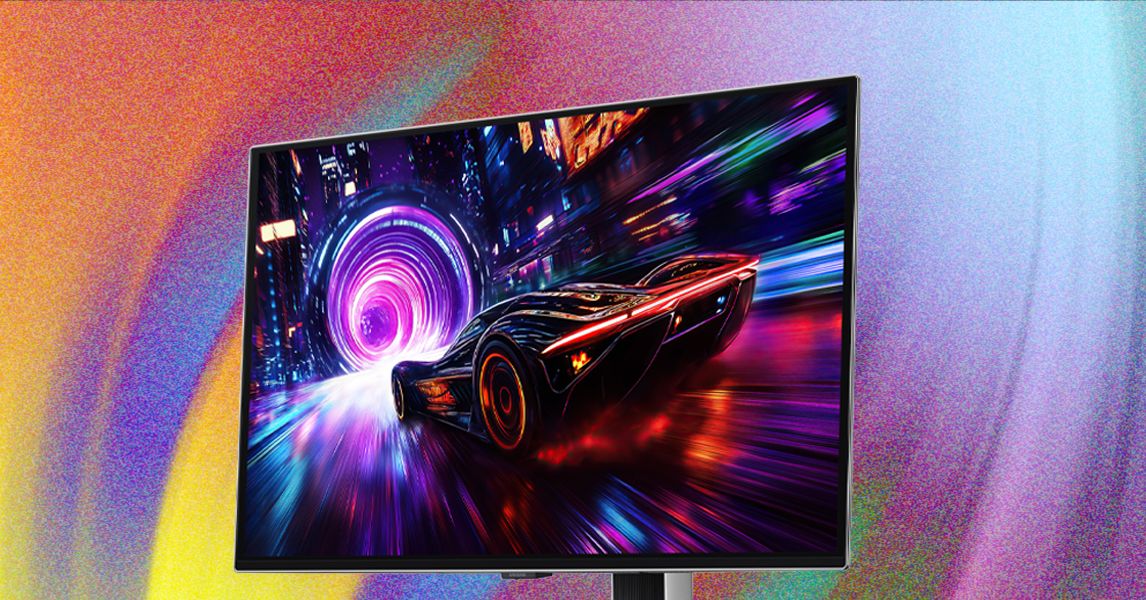
Samsung Odyssey G81SF OLED Gaming Monitor Review: Gorgeous Leave a comment
Let’s minimize to the chase—Samsung’s newest QD-OLED pc monitor is totally superior, and I’ve cherished having it at my desk for the previous month or so. Each recreation I play on it seems unbelievable, and it has shortly grow to be the centerpiece of my battle station.
Even so, I am nonetheless having bother recommending 4K high-refresh screens to individuals who have to purchase and construct their very own techniques. Having a monitor with some room to develop is the correct alternative, however the hole between efficiency and functionality may be irritating for those who’re on in any other case budget-friendly {hardware}. In the event you’re considering of creating an improve, very nice 1440p screens can be found for underneath $400, they usually may be a greater efficiency match for most individuals.
However, for those who’ve already obtained probably the most highly effective gaming PC in your pal group and also you’ve obtained the money to spare, you’ll be extraordinarily happy with the Samsung G81SF. It gives the most effective panel kind within the class, the very best decision and refresh fee trendy techniques can fairly handle, and the suite of options to match.
Quick Refresh, Excessive Decision
The G81SF options Quantum-Dot OLED expertise. (We now have an in-depth explainer about panel varieties if you would like the technical particulars.) The result’s nearly the most effective gaming monitor expertise you possibly can have in the mean time. Colours are tremendous vivid and vivid, and shadows and darkish areas completely disappear into blackness. It makes me need to flip off the lights, placed on some headphones, and settle in for too many hours of some deeply cinematic recreation.
For most folk, the QD-OLED screens are going to be the very best gaming expertise you could find, however there are options. In the event you’re simply set on 4K and 240Hz, the Mini LED version of the same screen from Samsung has a slower response time, and gained’t have the identical lovely Quantum Dot-powered colours, however may be discovered for $700 or much less. In the event you’re contemplating this display, I don’t suppose that one will impress you almost as a lot, nevertheless it does point out the form of premium you’re paying for the latest tech.
Given the excessive refresh and determination, leveraging adaptive refresh right here shall be essential for stopping tearing, and the Samsung options FreeSync Premium Plus, relatively than Nvidia G-Sync. Essentially the most noticeable benefit to doing so is that it saves you some bucks, with FreeSync screens typically being a bit cheaper than their counterparts. The opposite benefit is that it really works with each Nvidia and AMD playing cards, so that you gained’t be tied to at least one or the opposite when looking for GPUs.
The difficulty for most individuals will simply be getting video games to run easily. I’m fortunate sufficient to have an RTX 5090 (7/10, WIRED Recommends) for assessment functions. Even with Nvidia’s present top-end, not too long ago launched card, most trendy video games gained’t get anyplace near 240 FPS at 4K with out vital settings tweaking and liberal use of body era. In the event you’re on a lower-powered or older card, you would possibly get annoyed to search out that solely Terraria runs at full decision and refresh fee. Individuals with playing cards older than the RTX 20 Sequence ought to avert their eyes, as a result of it’s seemingly you gained’t even have the ability to output at 4K and 240Hz, not to mention recreation.
Tech and Stand
It has a easy platform stand, which is sufficiently sturdy given the comparatively heavy display, with a fundamental cable loop on the base. It additionally has RGB lights in a small ring across the again, however with the intention to see them your room will should be darkish and your monitor pretty near the wall behind it. You possibly can set them from the on-screen show, so no further software program wanted.
New screens typically come out of the field with the display brightness turned manner up, and I like to recommend turning it all the way down to anyplace from 20 to 30 p.c. You may be shocked how a lot it spares your eyes over the course of some hours of gaming, and it’ll prevent a couple of bucks in your energy invoice. I tweaked just a few different settings as nicely, together with turning down the distinction to 40 and the colour to twenty.
It’s actually vital to the touch on the ports, as a result of each DisplayPort 1.4 and HDMI 2.1 depend on Digital Stream Compression to achieve 4K at 240Hz. Compression would possibly sound like a scary phrase right here, however according to the VESA the effects shouldn’t be visually apparent. Technically, the HDMI port has a better bandwidth, however I couldn’t inform the distinction when switching forwards and backwards between them.
