
Asus Zenbook S 16 (2024) Review: A Well-Balanced Windows Laptop Leave a comment
Asus’ massive push to reinvent its laptop computer tech has lastly come to fruition, and the Zenbook S 16 makes the corporate a critical contender within the midrange laptop computer house and past.
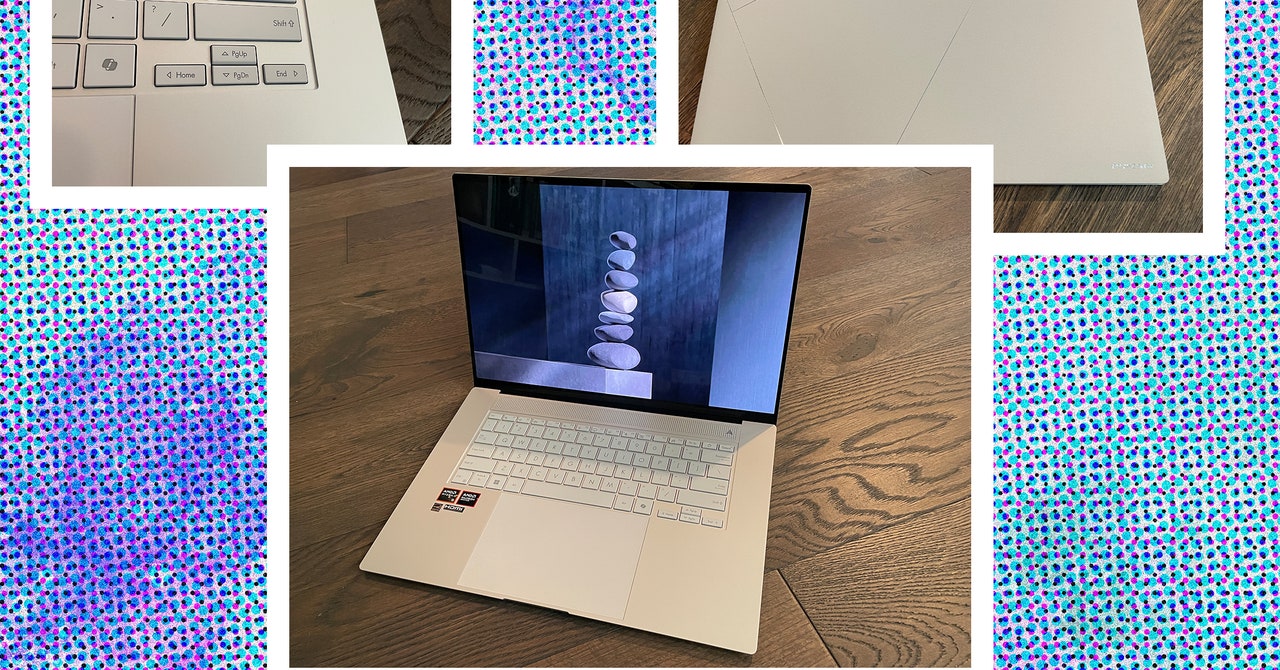
It’s maybe finest to start out with essentially the most seen improve: the chassis. Moderately than counting on the standard design of steel or plastic, Asus has invented a brand new materials known as Ceraluminum, which it says is the results of 4 years of labor to mix aluminum and a sort of ceramic into a brand new compound.
The main points are complicated and never totally clear, however basically it bonds the 2 supplies into one thing that, in concept, is stronger, lighter, and extra immune to put on and corrosion. Ceraluminum is used solely on the higher lid of the brand new Zenbook S, however you’ll discover it instantly. It seems like plastic however has the rigidity of steel, and it’s straightforward to see how skinny and lightweight it permits the display and lid to be.
The laptop computer is obtainable in two colours: Zumaia grey and Scandinavian white. I obtained the latter, which is extra of a silvery gentle grey, whereas the Zumaia choice may be very darkish.
{Photograph}: Christopher Null
The 16-inch show gives ample room for a spacious keyboard, although there is not any numeric keypad, leaving numerous useless house on both facet. The half-height arrow keys are offset, positioned under the Shift button, making them extra handy to entry than these on many different laptops that cram them in amongst the whole lot else. I did discover the keyboard motion to be a bit mushy, nevertheless. The keyboard backlighting is extraordinarily brilliant, and admittedly too intense at full energy. Lastly, the big touchpad contains Good Gesture help, which helps three-finger and four-finger shortcuts the consumer can customise. When you get the hold of them, they will actually velocity up your work.
Underneath the hood, Asus has outfitted the Zenbook S 16 with the brand new AMD Ryzen AI 9 365 CPU (paired with a Radeon 880M GPU), 24 GB of RAM, and a 1-terabyte solid-state drive. The touchscreen’s decision is a stable 2,880 x 1,800 pixels. Enlargement ports are all side-mounted and embrace two USB-C connectors supporting USB4 (one is required for charging), a USB-A port, HDMI output (full-size), and a full-size SD card reader.
-Side-Open-Reviewer-Photo-SOURCE-Christopher-Null.jpg)
{Photograph}: Christopher Null
